AI-generated image
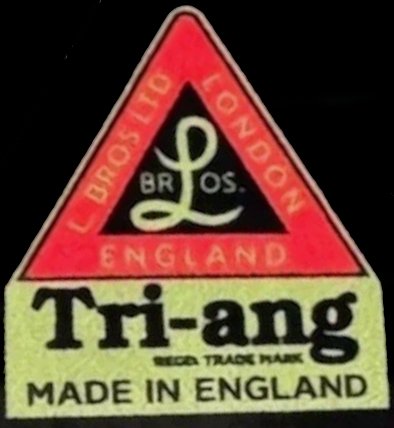
The second connection emerges when we stop looking at toy catalogues and turn to Exin's company records.
Consulting the Commercial Register allows us to trace the changes in the company's name and discover how, in 1966, its relationship with the British group was reflected even in its own corporate name.
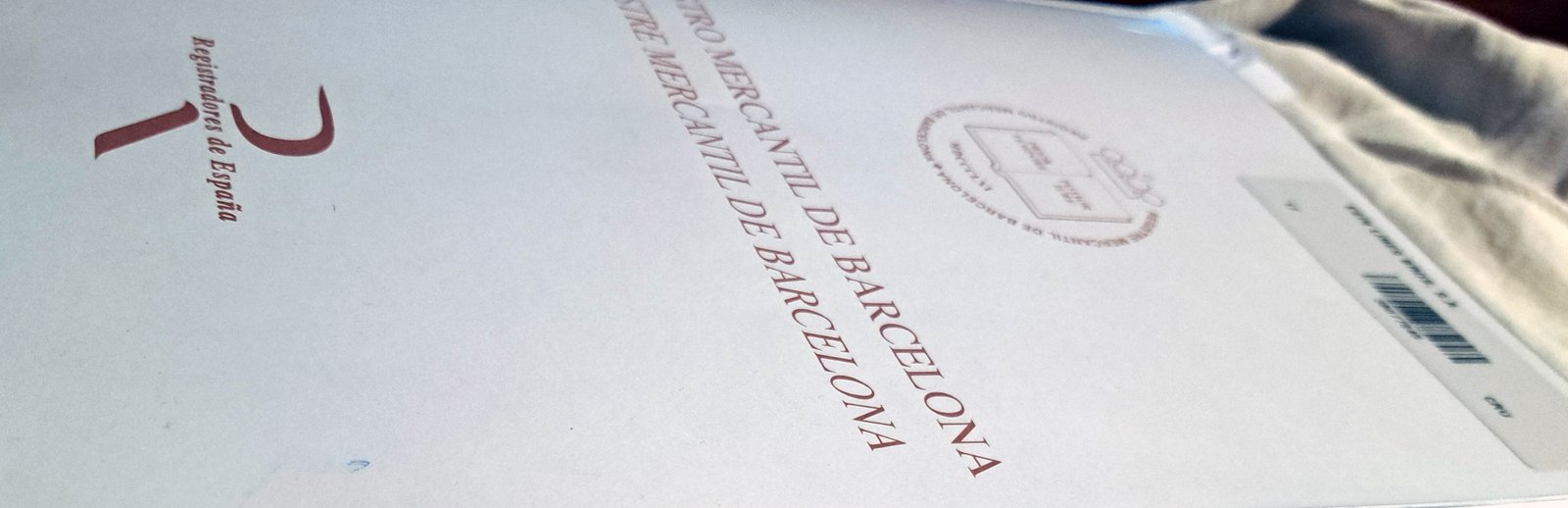
In summary, the history we have reconstructed from the records consulted is as follows:
This final change is particularly significant. The connection with England can no longer be inferred solely from the marketing of certain toys: it appears directly in the corporate name of the Spanish company itself.
However, the most revealing detail is not simply the company's name, but the composition of its board of directors.
According to the company records consulted, the board of the newly named company consisted of:
Who were Walter Moray Lines and Alan Cathcart? Biographical and business records allow us to link them to the management structure of Lines Bros in the United Kingdom.
We are therefore not dealing with a coincidence of names or a distant commercial relationship: two people associated with the British group were also part of the management of Exin Lines Bros.
This discovery adds a new dimension to the company's history. The relationship between Exin and Lines Bros was not limited to the manufacture or distribution of products; there was also a direct link at the corporate management level.
The company retained the name Exin Lines Bros until the end of its existence, although its board of directors changed over the years. According to the records we have consulted, British representatives remained associated with the Spanish company until 1973.
The company would eventually suspend payments and close in 1993, bringing to an end a business history that had left a profound mark on the Spanish toy industry.
With this second connection, the relationship between Exin and England becomes much clearer. But we still need to reach the area that interests us most as enthusiasts of Madelman's history.
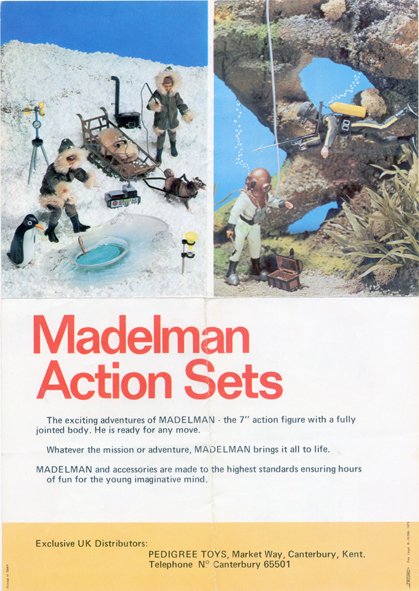
Over the years, some Madelman boxes acquired in England have contained an advertising leaflet dated 1973 identifying Pedigree Toys as the distributor of Madelman in that country.
We know that similar leaflets exist for at least Belgium, Switzerland, England and Portugal. Everything suggests that, in 1973, Exin was focusing some of its efforts on exports, taking its toys beyond Spain's borders.
But how were Exin and Pedigree Toys connected?
In September 1971, Lines Bros was sold, and Dunbee-Combex-Marx acquired the division that included Pedigree Toys.
At this point, it is worth distinguishing between what we can document and what remains, for now, a hypothesis.
It is reasonable to ask whether the links between Exin's British directors and their companies in the United Kingdom might have facilitated commercial contacts with Pedigree Toys. This is a plausible possibility, although we do not have sufficient evidence to claim that this was the specific route through which the relationship between the two companies was established.
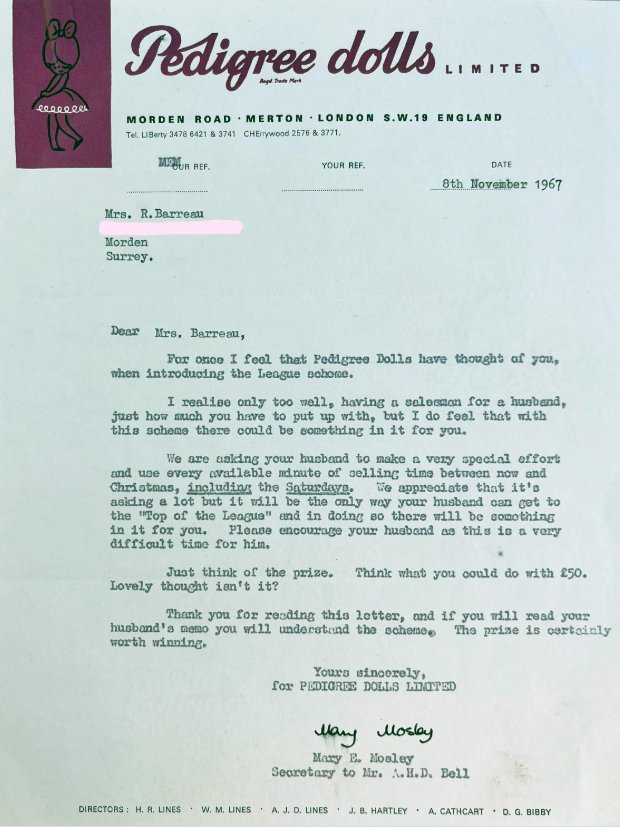
What we do know, thanks to the Barreu family and Ann Jalili, is that this letter exists, and it shows that in 1967 Walter Moray Lines and Alan Cathcart were members of the management of Pedigree Dolls.
We also have the aforementioned leaflet, which advertises Madelman and identifies Pedigree Toys as the distributor of the figures in England.
This document is particularly valuable evidence: it demonstrates that Madelman had reached the British market through a company with a long-established presence in the toy industry.
But the relationship between Exin and the British market was not limited to Madelman.
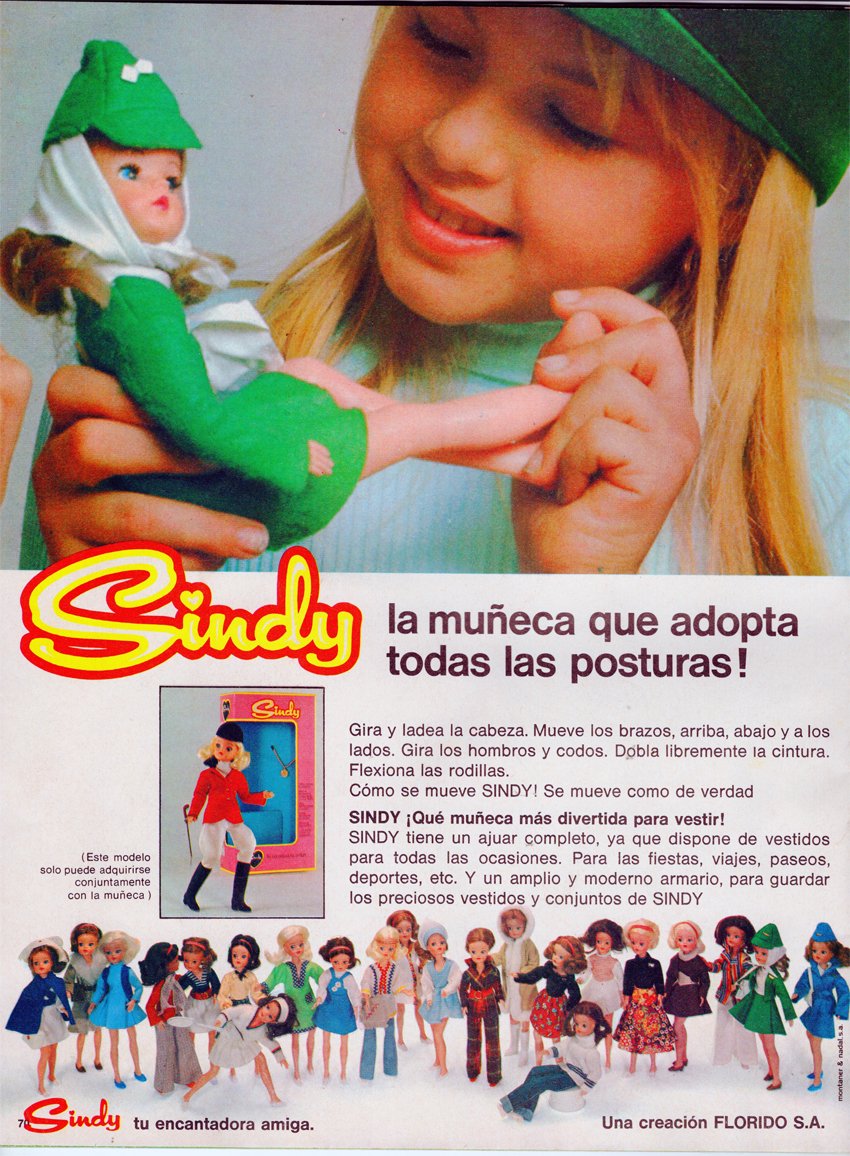
We also know that Exin distributed the Sindy doll in Spain through Florido, S. A., another company associated with Josep María Arnau Pibet. Advertising from the period allows us to place Sindy's commercial distribution in Spain between 1974 and 1977.
An interesting exchange between the two markets begins to emerge: Madelman and Exin Castillos found their way to England, while Sindy arrived in Spain.
And this is where the research could have ended. We had a corporate chronology, a Madelman leaflet and Spanish Sindy advertising. That alone would have been enough to tell an interesting story.
However, life sometimes has surprises in store that allow us to go far beyond anything we could have imagined.
Over the past year, through the Enciclopedia Madelman (https://www.enciclopediamadelman.com/), we have been fortunate enough to make contact with Annie and Maria, two Sindy collectors who are carrying out extraordinary research into the history of this doll.
We encourage you to visit their website, Our Sindy Museum (https://www.oursindymuseum.com/), and discover the work they are doing.
We have tried to contribute to their research by sharing all the information we have been able to gather about Florido and the marketing of Sindy in Spain. We are also continuing to hope that we can obtain further information about its distribution in Mexico to help complete this story.
It was Annie who told us about Tony, whose father had worked for Pedigree Toys and whose family had preserved an extraordinary story connected with those years.
His father's name was Roger Barreau, and he worked as a sales representative distributing toys for Pedigree Toys. From what we have been able to learn, Roger loved his profession, and his enthusiasm left a lasting impression on his family too.
It is not difficult to imagine the excitement with which he must have approached his work, surrounded by toys that would eventually find their way into the hands of thousands of children. Those products were not simply merchandise to be sold: they were objects capable of inspiring imagination, accompanying children's games and becoming part of the memories of an entire generation.
In a photograph from 1978, provided by Annie with the family's permission, we can see Mr Roger Barreau at a toy fair alongside a Sindy doll.
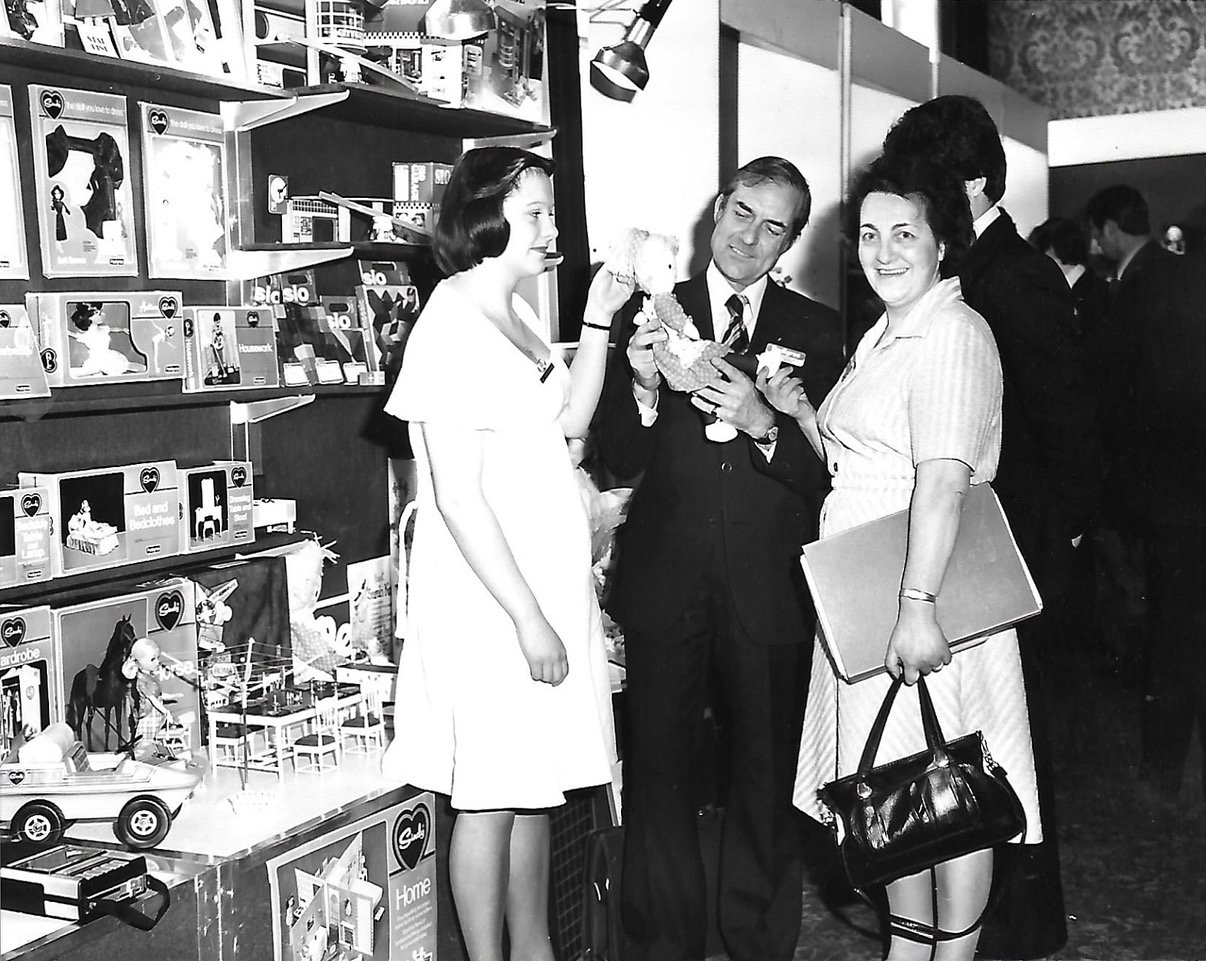
The photograph allows us to get closer to a real person, someone who was part of the commercial history we had previously been trying to reconstruct mainly through documents and company names.
But there is something even more special.
For decades, Roger's family had preserved toys and documents relating to that period of his professional life. They had kept those objects because they were part of their father's life, because they meant something to him and because, in a way, they were also part of their own family history.
Over the years, those materials had become more than personal keepsakes. Without necessarily realising it at the time, the family was preserving evidence of an era and fragments of a business and commercial history that might otherwise have been lost forever.
Thanks to the generosity of Tony and his sister, and to Annie's extraordinary work organising and digitising the material, we have been able to discover new items that help us better understand the relationship between Pedigree Toys and Madelman.
And this is where the documents begin to speak to us in a very special way.
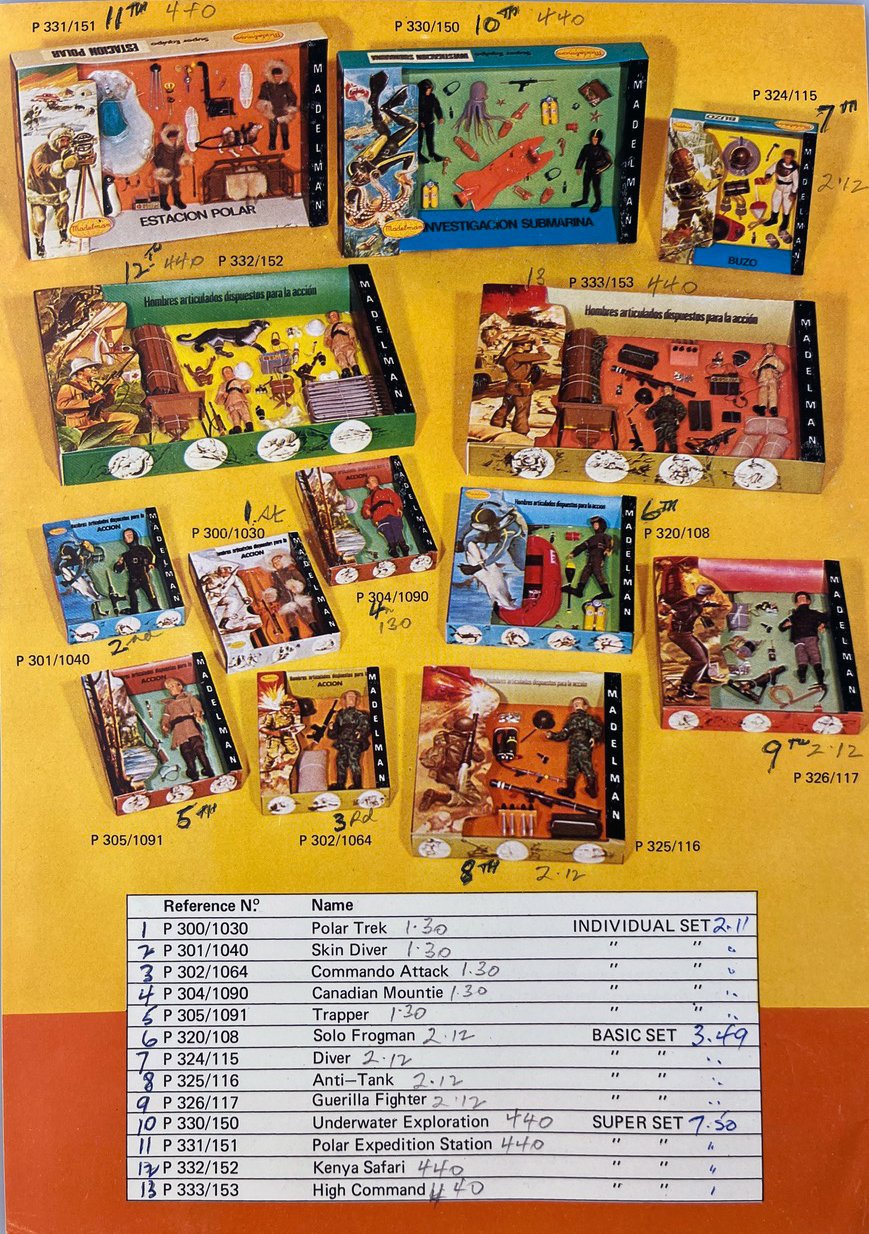
Among the preserved materials, we found the Madelman leaflet we already knew, but this time with prices handwritten by Roger. Thanks to his annotations, we can gain an insight into prices at the time.
We also have price lists and order forms. These are no longer simply advertisements intended to introduce people to the toys, but commercial documents that allow us to glimpse how those products were offered and distributed.
The price lists show that it was not only Madelman that was marketed, but also Exin Castillos. Furthermore, we can identify the prices and specific models on offer, which match those shown in the advertising leaflet. All this allows us to appreciate that the range intended for the British market was not identical to the one sold in Spain.
Among the preserved documents, we have a January 1974 price list featuring Madelman and Exin Castillos, an order form from the same year, another price list from spring 1975 featuring both toy ranges, and a final price list dated June 1975 in which neither product appears.
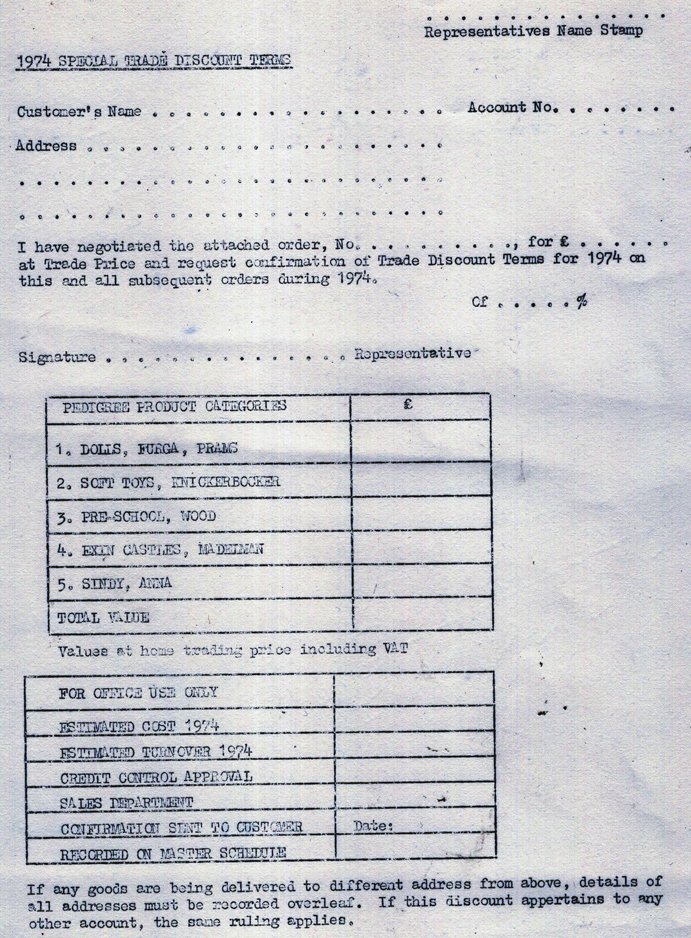
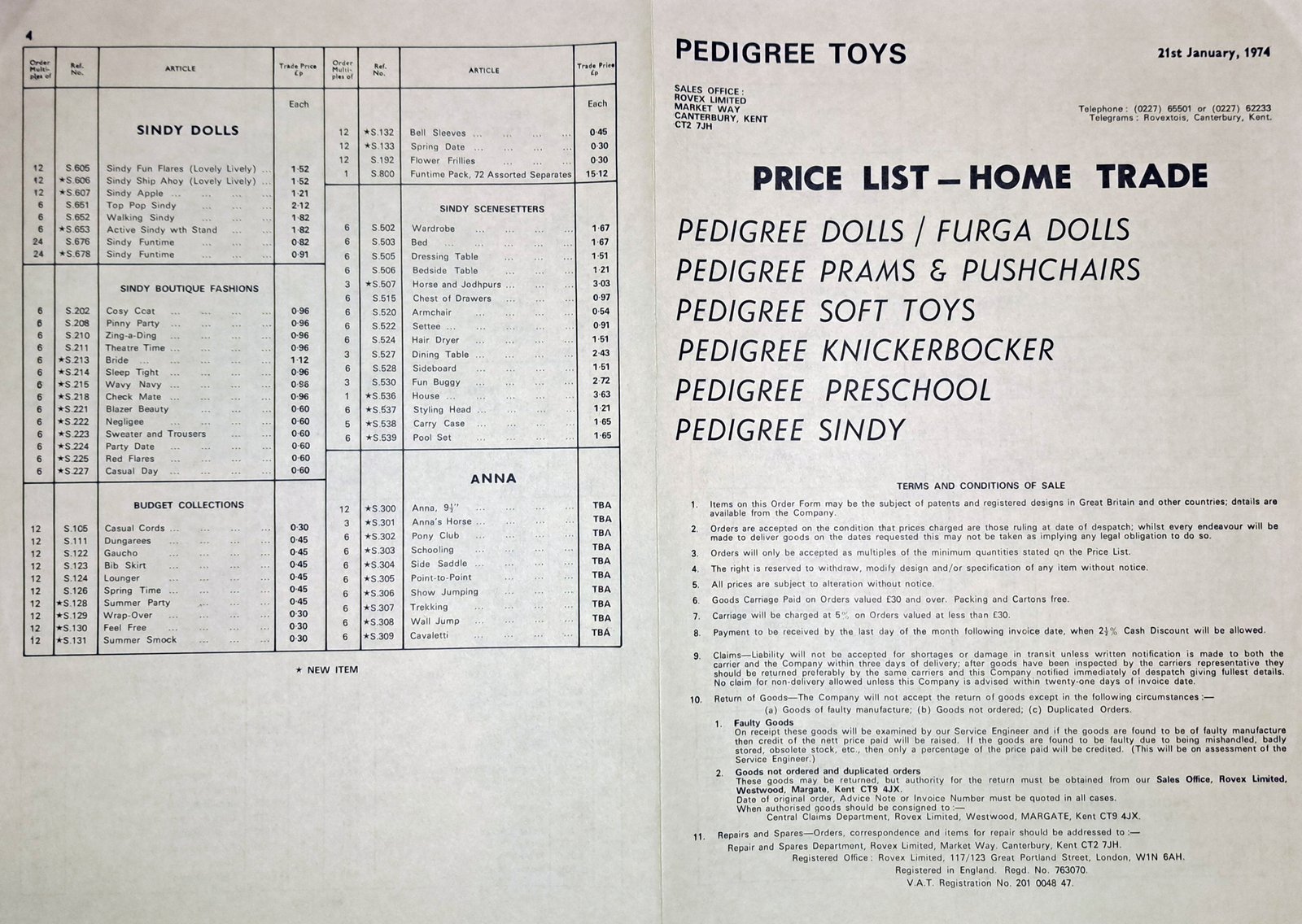
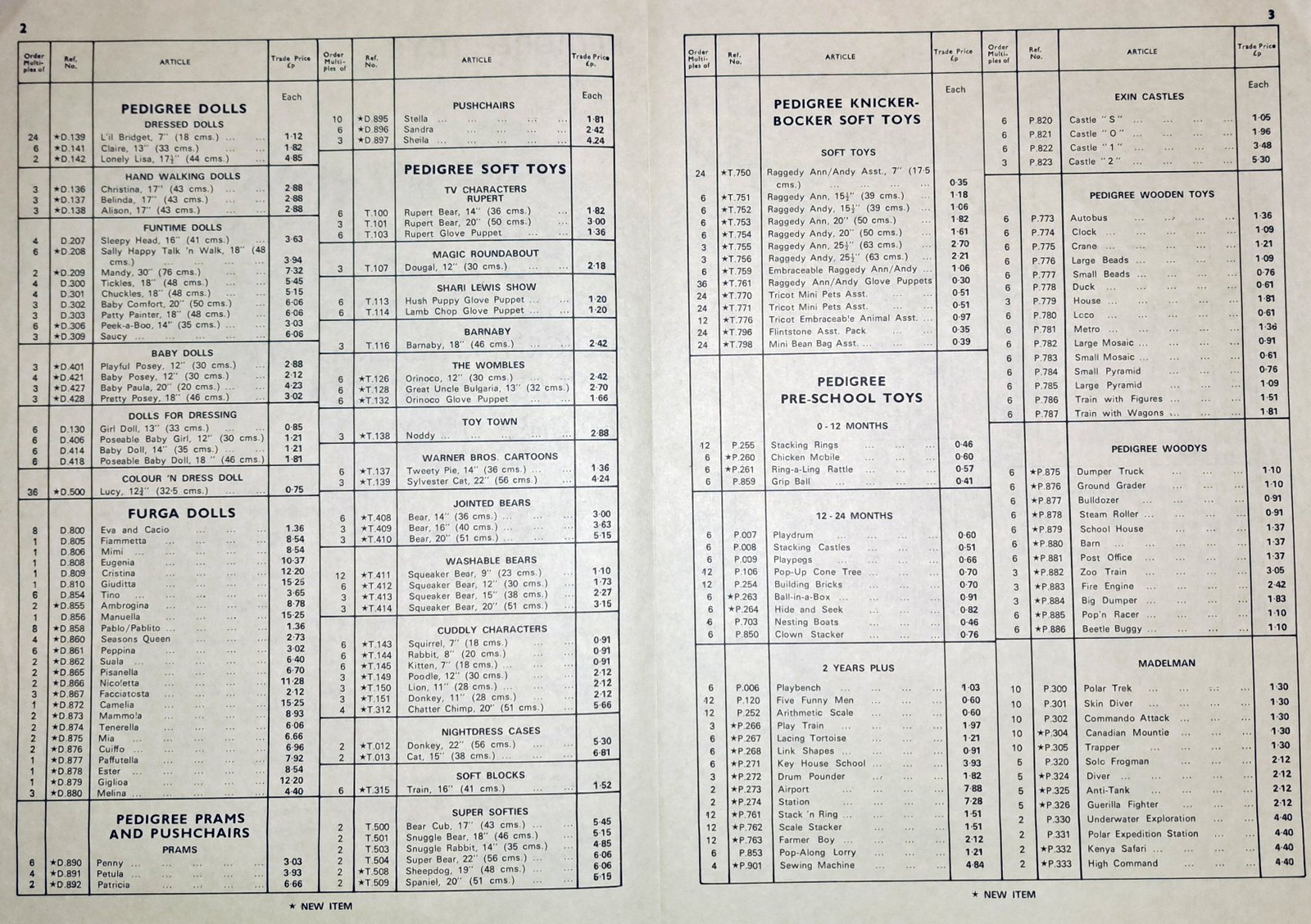
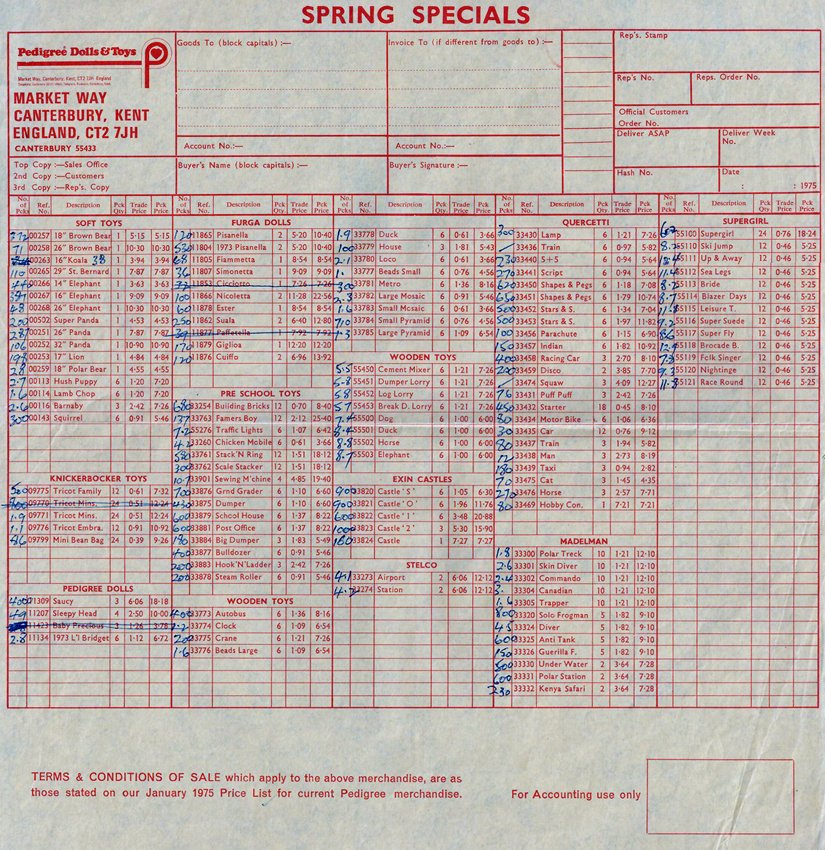
Each of these papers provides dates, references and new details. Taken individually, they might seem like modest documents, but together they allow us to reconstruct part of the commercial activity of those years.
What a privilege it is to be able to examine and study them so many years later!
And just when we thought we had been lucky enough to find an exceptional collection of documents, another surprise was waiting for us.
This time, we must thank another Tony, a Madelman collector who acquired several of the items preserved by the Barreau family.
Among the Madelman figures that Roger and his family had kept in their boxes, we found a Diver, an Astronaut 2001 and a Shock Trooper. Roger also had loose figures that he could show to the toy shops to which he supplied his products.
We can see six Madelman models that Roger kept: Submariner, Shock Trooper, Guerrilla Fighter, Hunter, Trapper and Polar Explorer. These models appear in the sales list and have a particular feature: they came with two types of display stands.
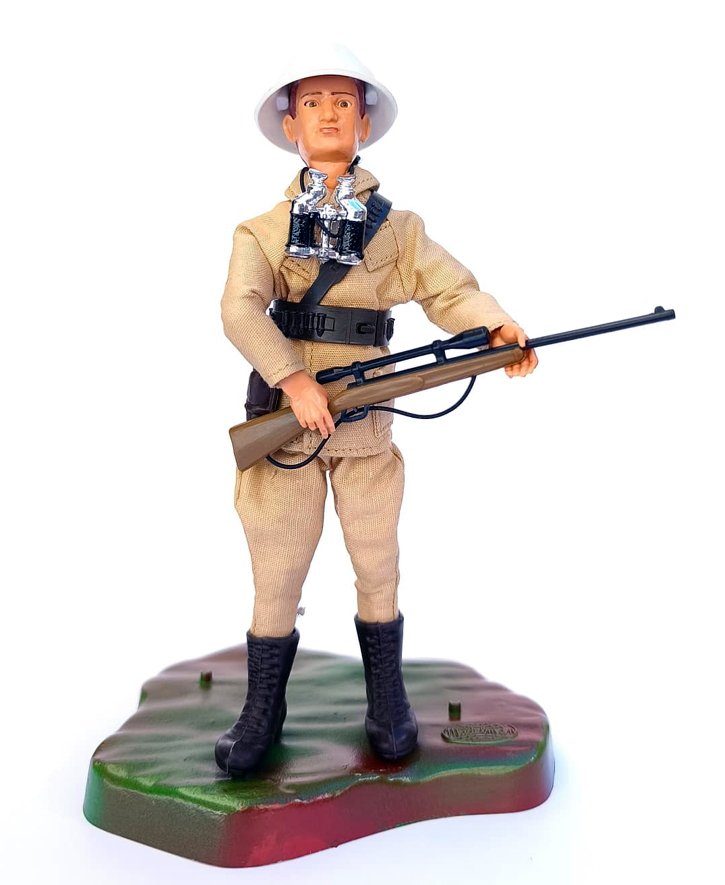
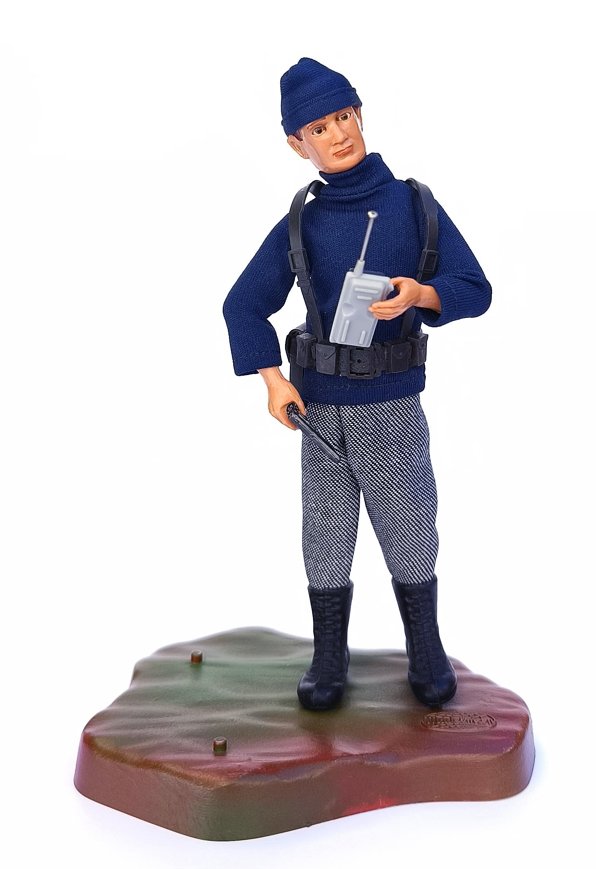
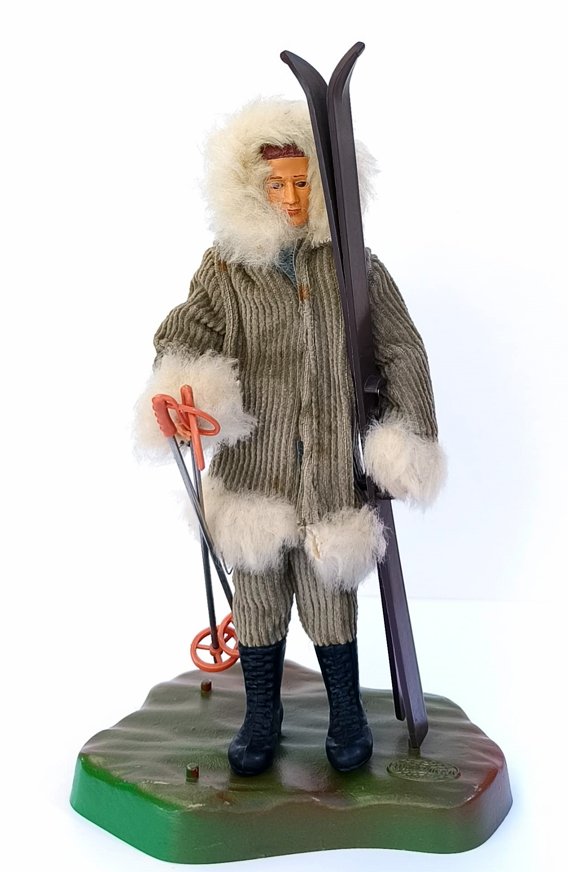
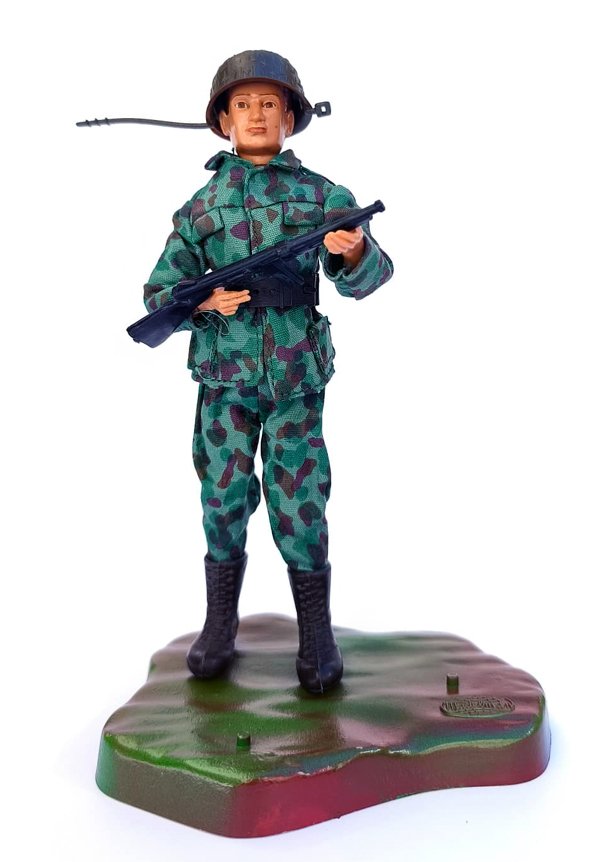
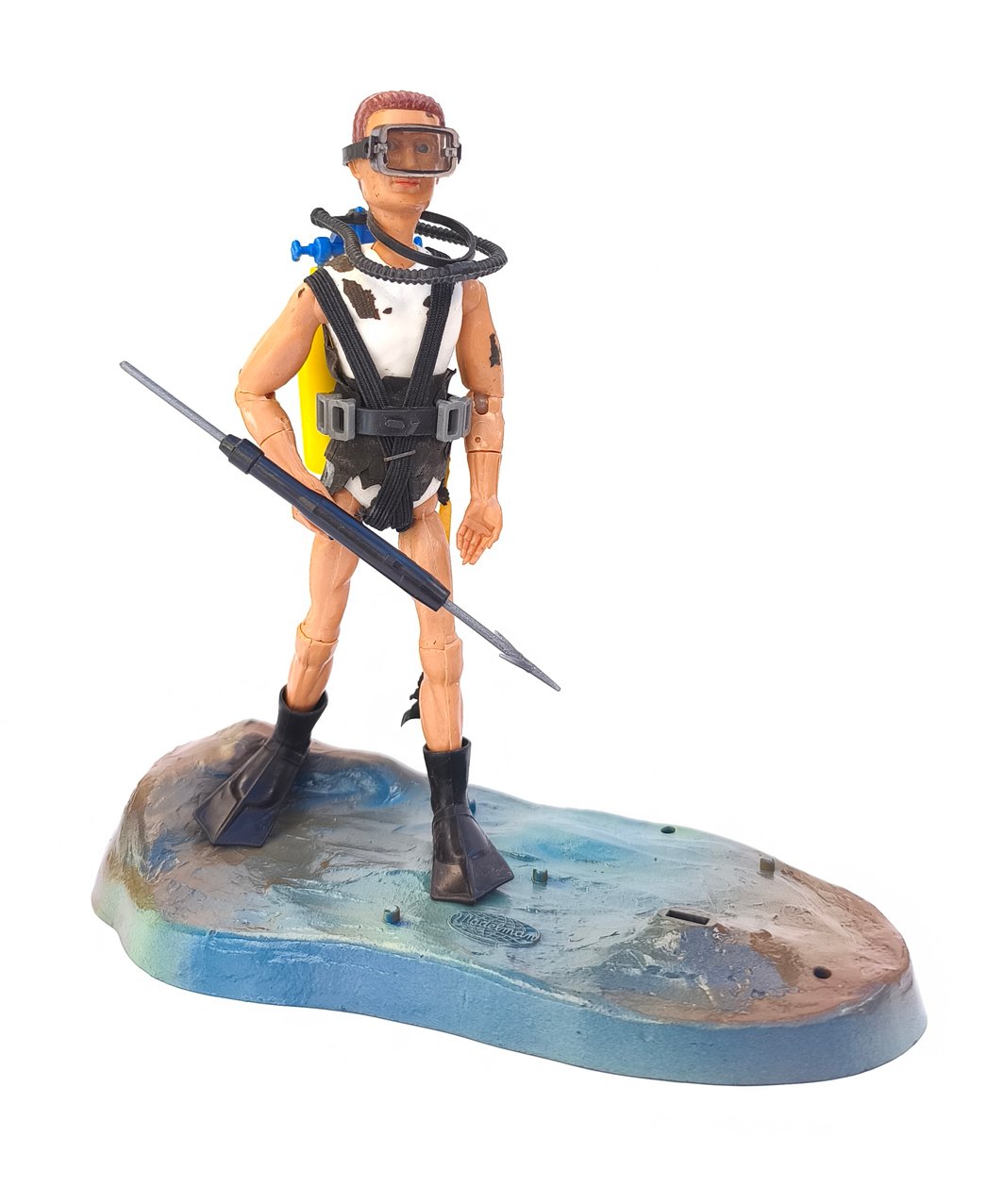
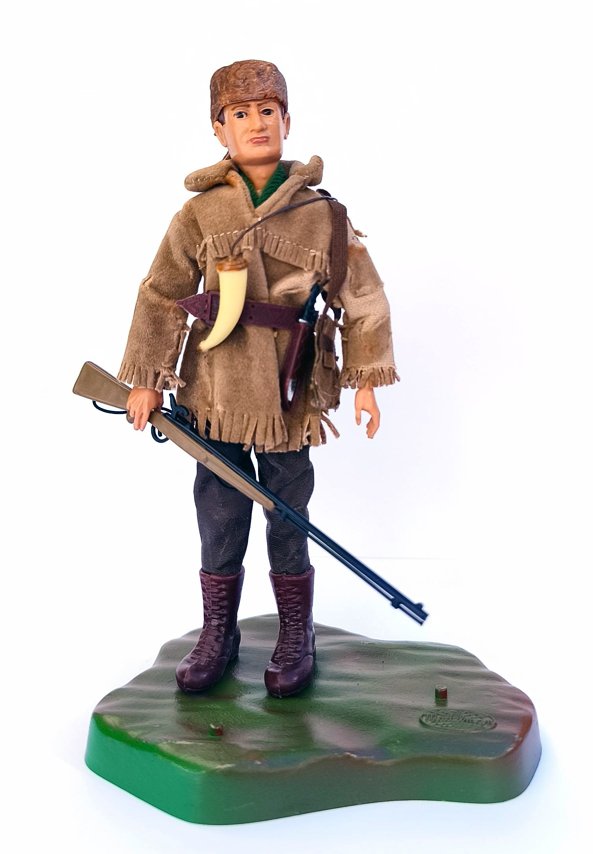
Collectors already knew about these stands thanks to the generosity of Carles Quatermass and other collector, who had shared information about them. We owe Santiago Sánchez the opportunity to see original Madel moulds, including the one for the “small” stand, which he also used to produce examples that many of us collectors were able to obtain.
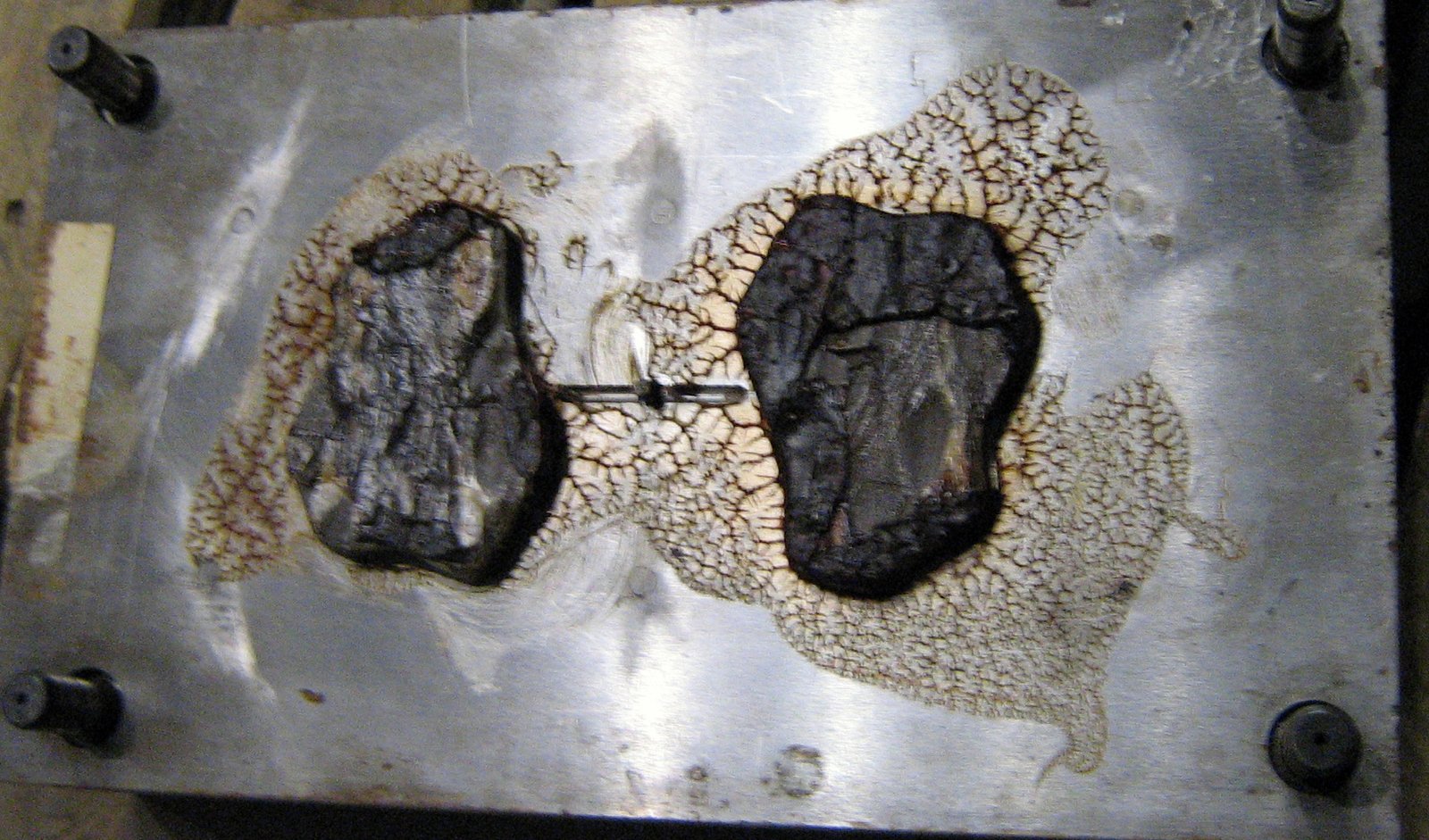
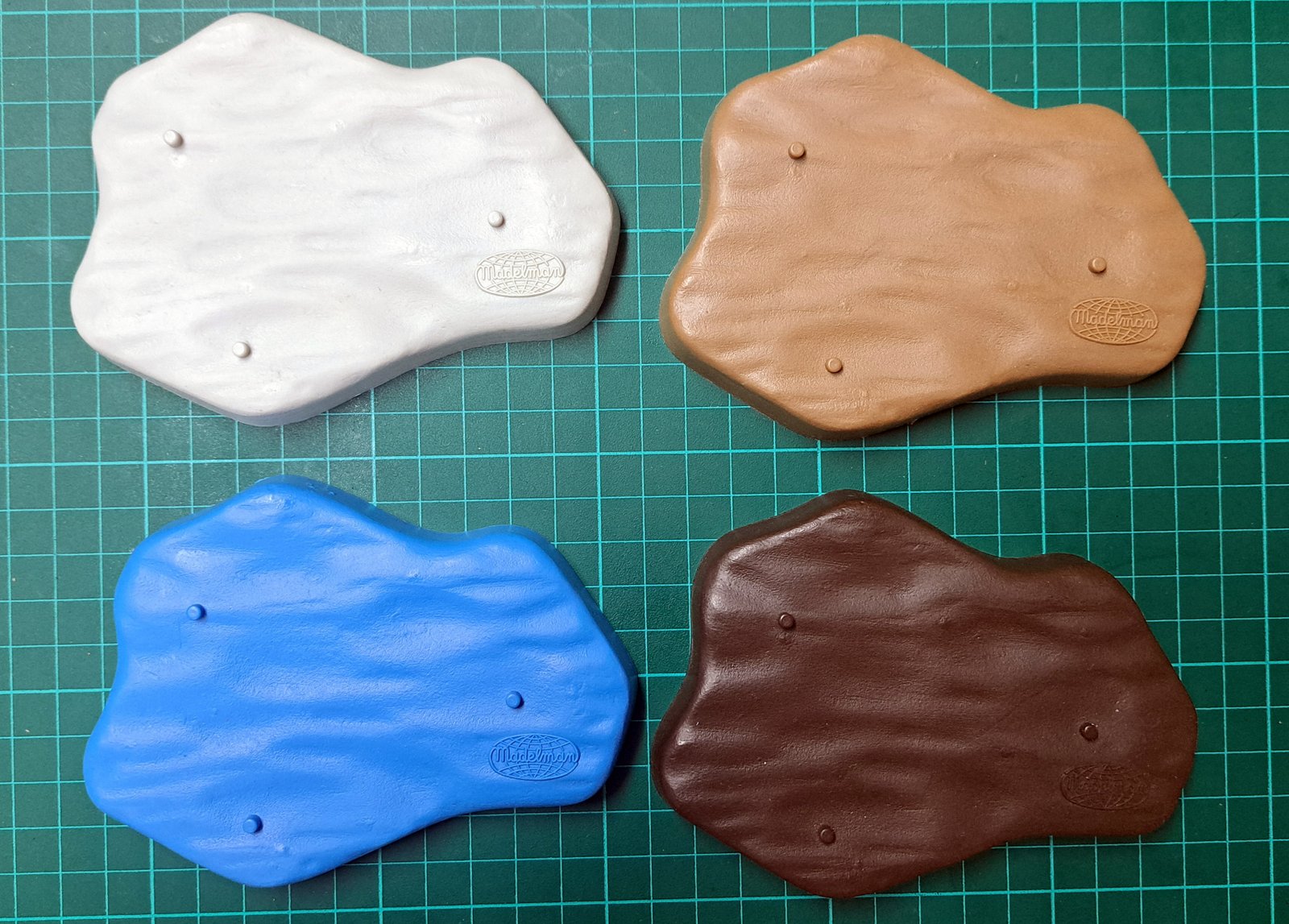
However, the examples from the Barreau family reveal some interesting new details.
On the one hand, we found a metal component belonging to the bluish-toned stand, allowing a Submariner to be displayed in a diving position. We had already suspected that this stand was intended mainly for underwater models, and this discovery strengthens that hypothesis.
On the other hand, we have stands in shades of green and brown that appear to have been intended for more general use, although we cannot rule out the possibility that they were used with different models.
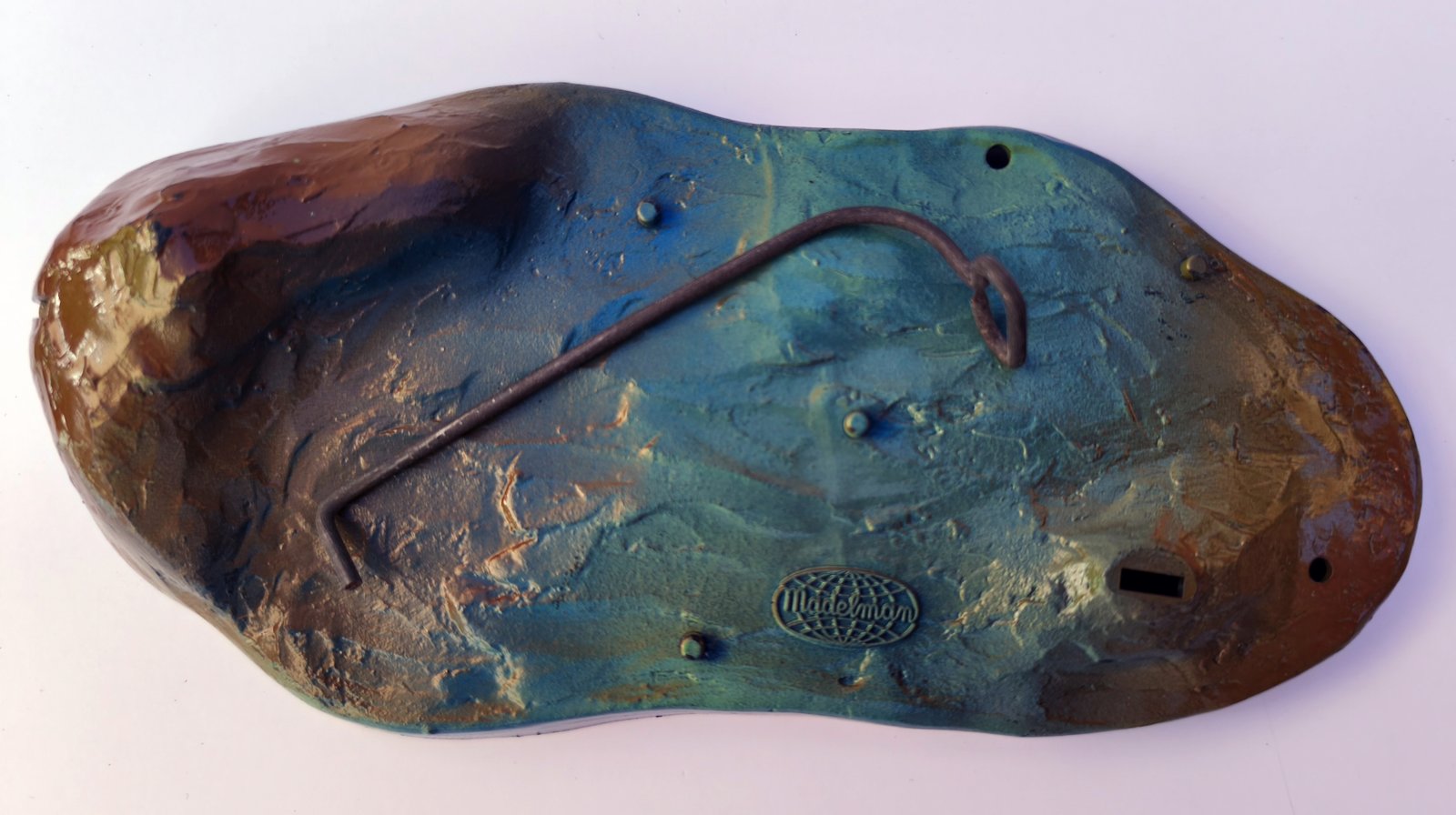
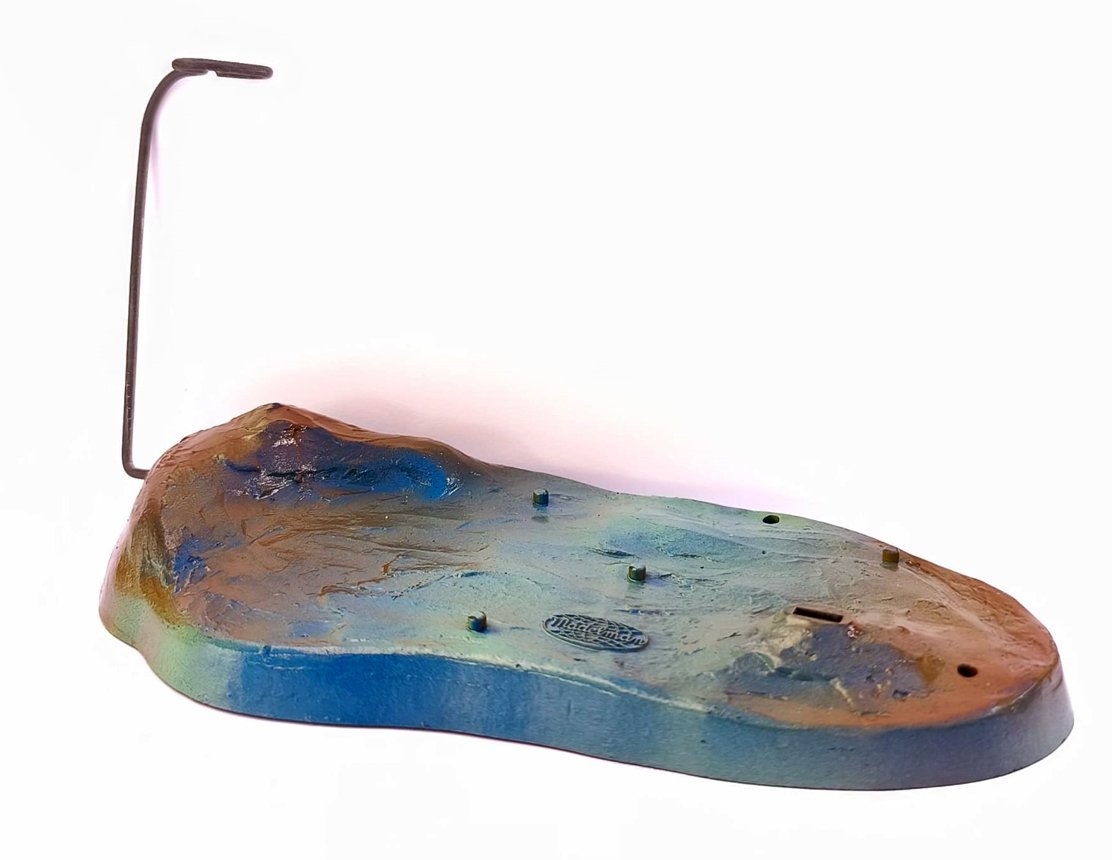
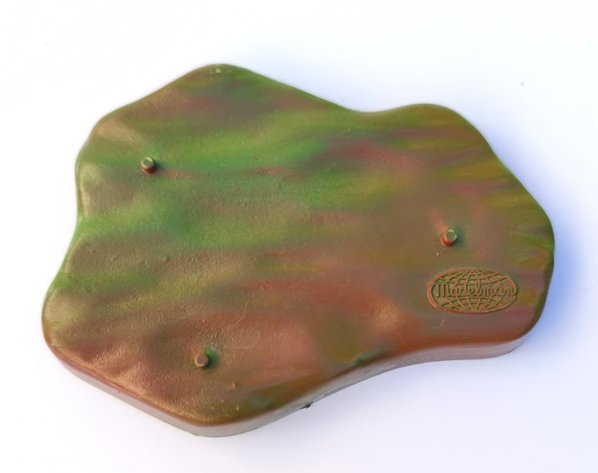
The second new discovery concerns not so much the stands themselves as the figures placed on them. In this case, we can see that the soles of the Madelman boots have holes that allow the figures to be secured to the stands, preventing them from falling over.
We already knew of similar holes in the boots of skiing figures and the Mounted Police, where they were used to attach skis or snowshoes. What is new is the confirmation that specific boots were also manufactured for figures intended to be displayed on these stands.
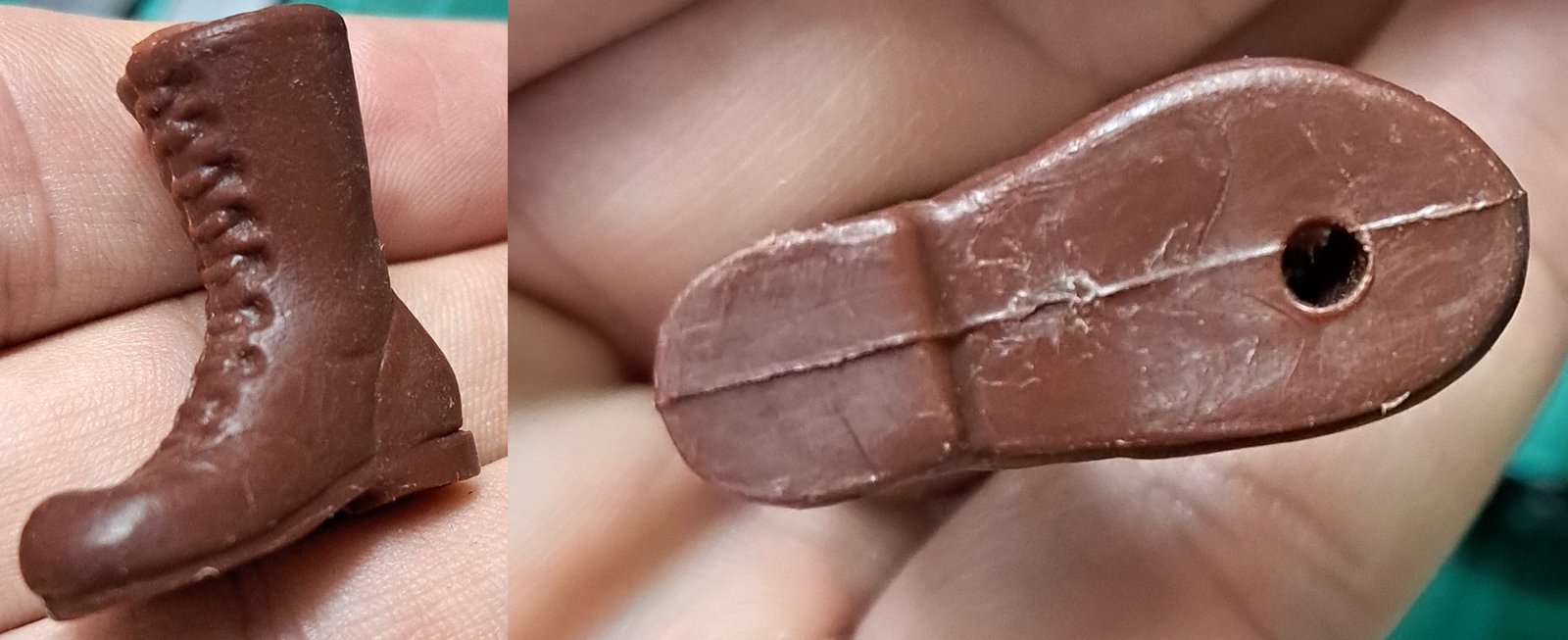
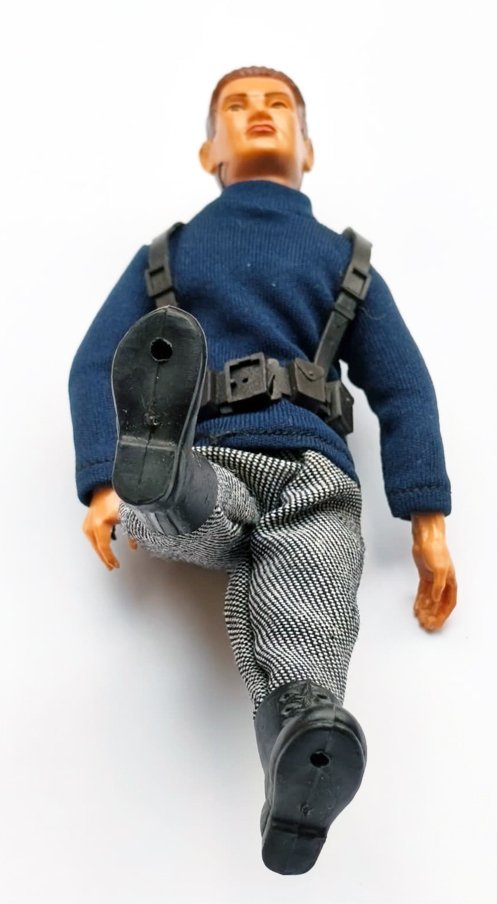
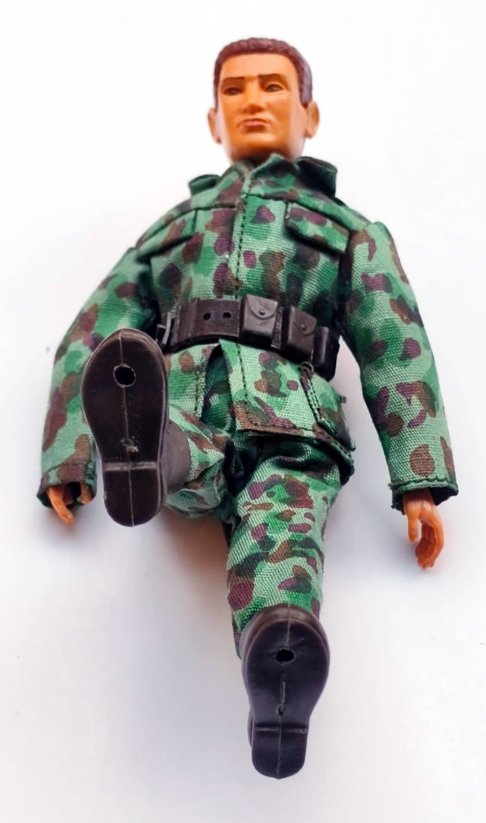
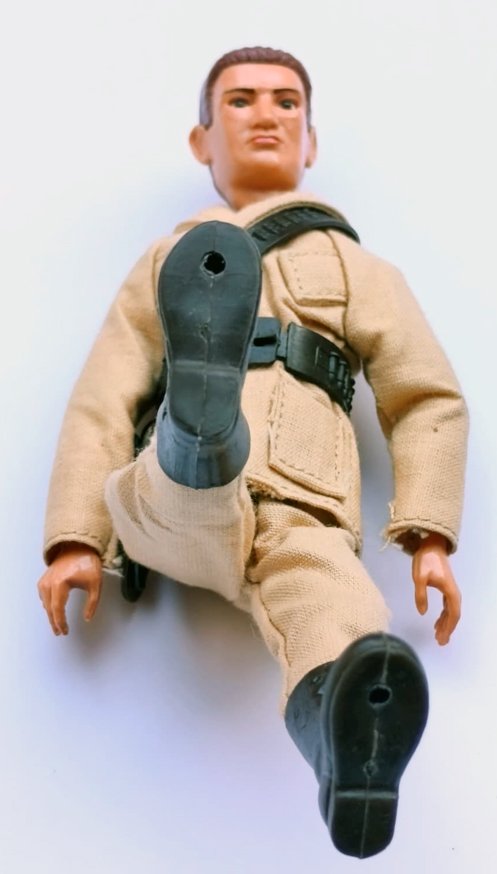
These are small details, but that is precisely where the interest of our hobby lies. A hole in a sole, a metal component or a pencil annotation can provide information that does not appear in catalogues and that we would find very difficult to recover by any other means.
As for Madelman display stands, we already knew of other related materials: a photograph of a sales representative obtained by José María Padilla, and several images from a sales folder that we were able to consult thanks to Sergio Gracia. Sergio also showed us a cardboard stand that was used in Germany.
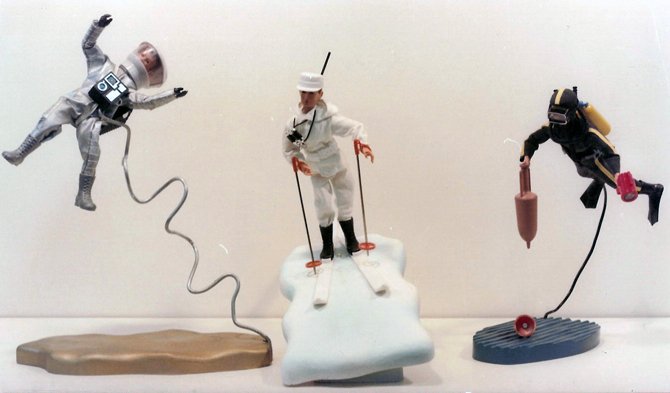
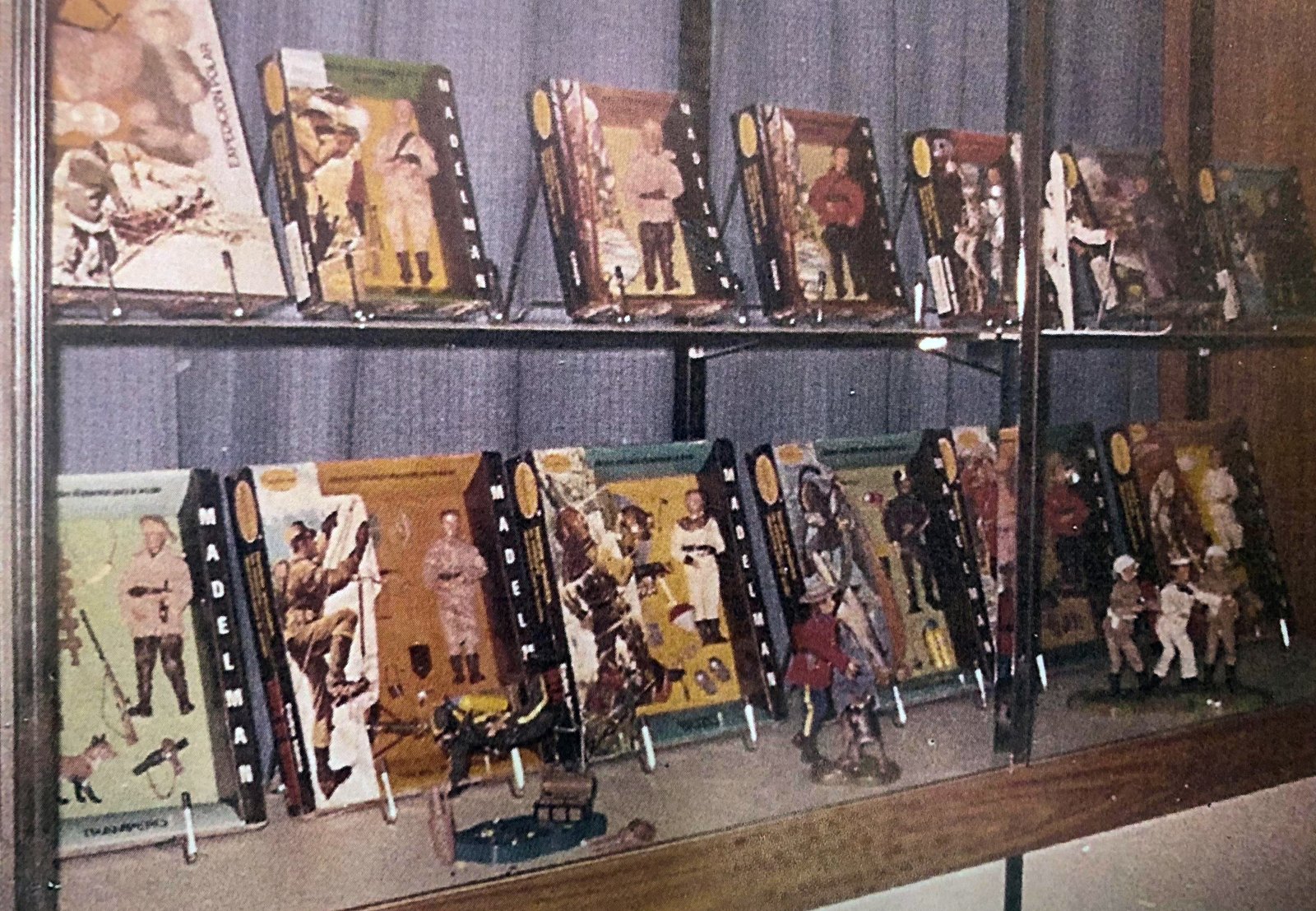
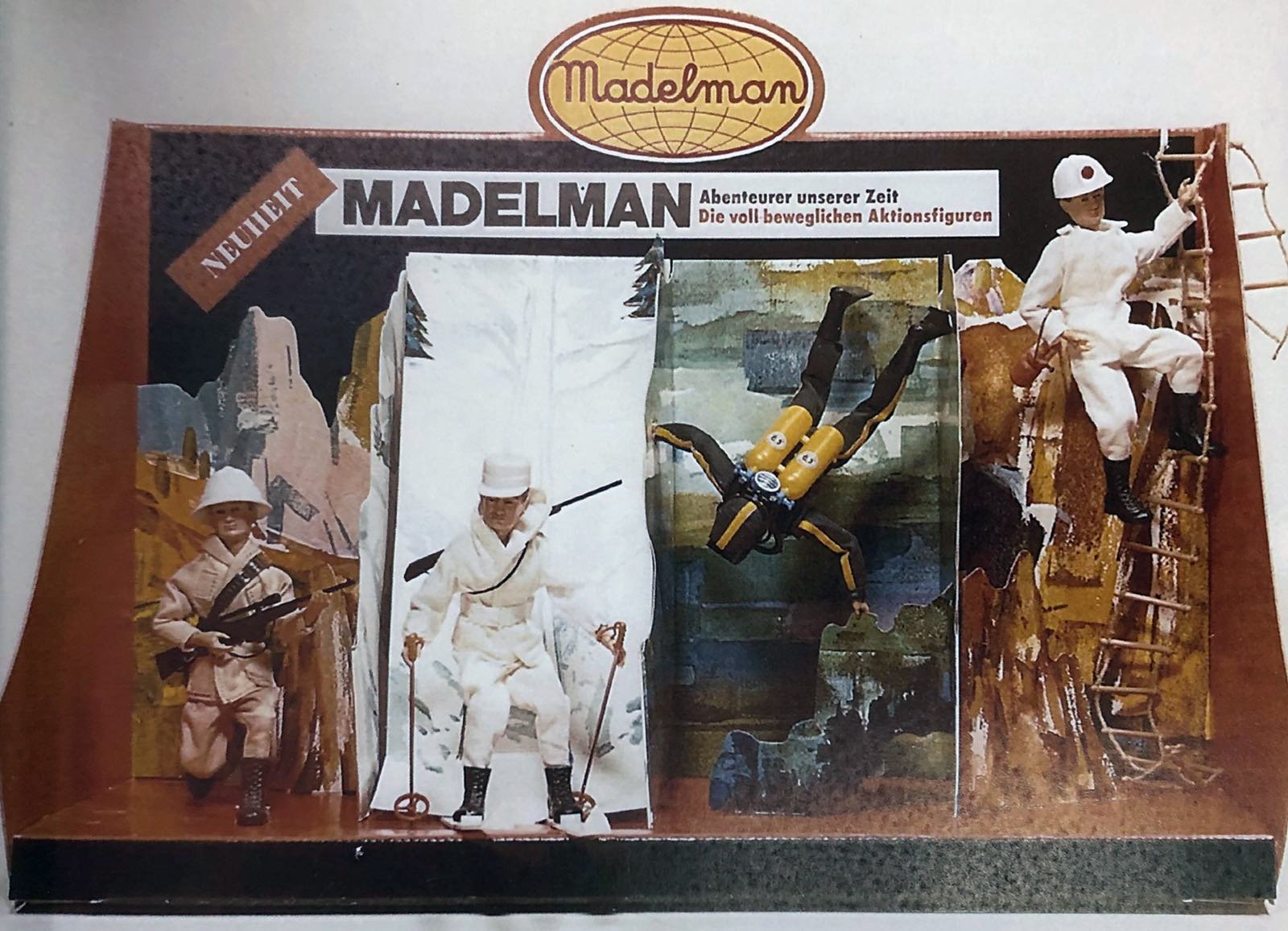
All this information, combined with the new materials from the Barreau family, allows us to gradually expand our knowledge of these accessories and their possible commercial uses.
And yet, beyond the specific discoveries, there is something I consider particularly important.
Mr Roger Barreau and his family have given us the opportunity to discover commercial documents, boxed Madelman figures and loose examples accompanied by their display stands. Viewed in isolation, these materials might seem modest, but they acquire enormous value when we try to reconstruct how these figures were marketed outside Spain and relate them to other documentary evidence.
The price lists bring us closer to the commercial reality of those years. The preserved figures allow us to see and appreciate the products that travelled to the British market. And, taken together, they help us understand that behind every international distribution operation there were people, business decisions and a story worth telling.
But none of this would have been possible if someone had not decided to preserve those memories.
We would like to express our gratitude to Tony and his sister for keeping their father's legacy alive and for sharing such a valuable part of their family history with us. We would also like to thank Annie for her research, for helping us establish this contact and for contributing to making these materials available for study and appreciation.
The fact that a family has looked after toys and papers for so many years, without necessarily knowing that one day they would help reconstruct part of Madelman's history, is something whose value is difficult to measure.
Because they have not simply preserved objects: they have preserved a part of their father's life. And by sharing them with us, they have ensured that those family memories have also become part of our collective memory.
Thanks to them, documents and objects that had been set aside for decades, far removed from their original commercial context, have begun to speak again. And with them, a small part of Madelman's history has found its voice once more.
For those of us who devote our time to researching these toys, discovering an unknown piece is always exciting. But discovering its origins, understanding its context and being able to connect it with other documentary evidence is something even more special.
It is precisely this opportunity to piece together the fragments of a historical puzzle that makes continuing our research worthwhile.
The final connection with England takes us to a later period, when Madelman was no longer being manufactured.
According to the testimony of former Madel production manager Mr José Manuel Torre, the remaining Madelman stock held in the warehouse after production ceased was sold to a British distributor.
For a long time, this information could have remained nothing more than a recollection passed down by those who lived through that period. However, we have found physical evidence that is consistent with this account and allows us to get a little closer to what happened.
An advertisement published in the Netherlands led us to acquire a yellow Madelman helicopter in its box. What made this particular example especially interesting was a sticker on the outside of the packaging and the fact that it came with a helicopter pilot figure.
When examining other examples, we discovered that green helicopters also existed with a similar sticker identifying their colour.
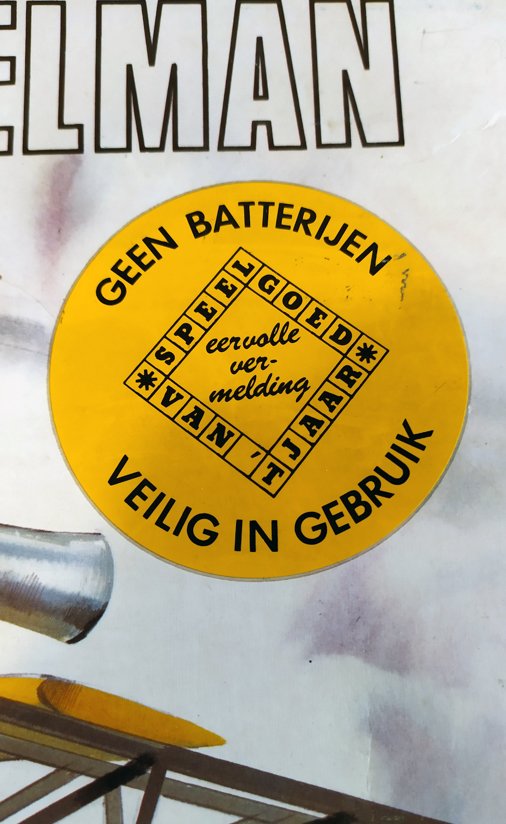
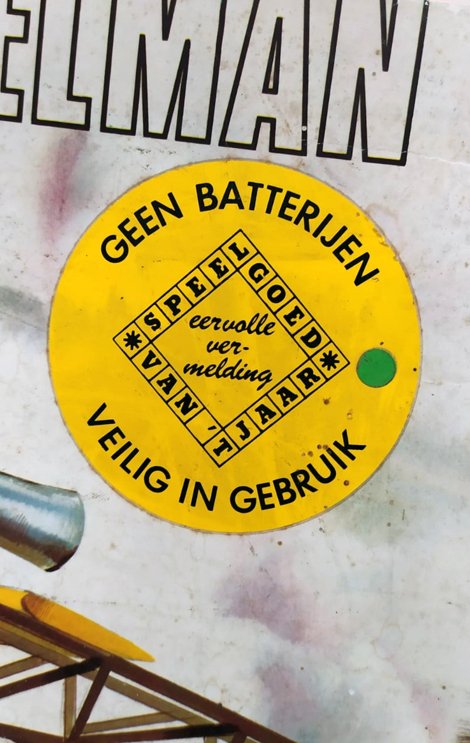
This difference opens up a new avenue of research.
Alain Montana, a French collector, found bags containing Madelman figures in shops in France. It was said that these figures were used as gifts or to deal with possible customer complaints. The possibility was also raised that, in some foreign markets, the helicopter might have been sold with a Madelman figure to make it more appealing to both children and their parents.
It is therefore possible that the green helicopter was marketed with a soldier, while the yellow one was supplied with the helicopter pilot. However, this correspondence between colours and figures will need to be confirmed by further examples or documentation.
The truly revealing discovery came when we examined the contents of the yellow helicopter's box.
Inside, we found a document providing information for handling possible complaints or issues relating to the product. And that piece of paper gave us a crucial detail: the name of the company responsible for its distribution.
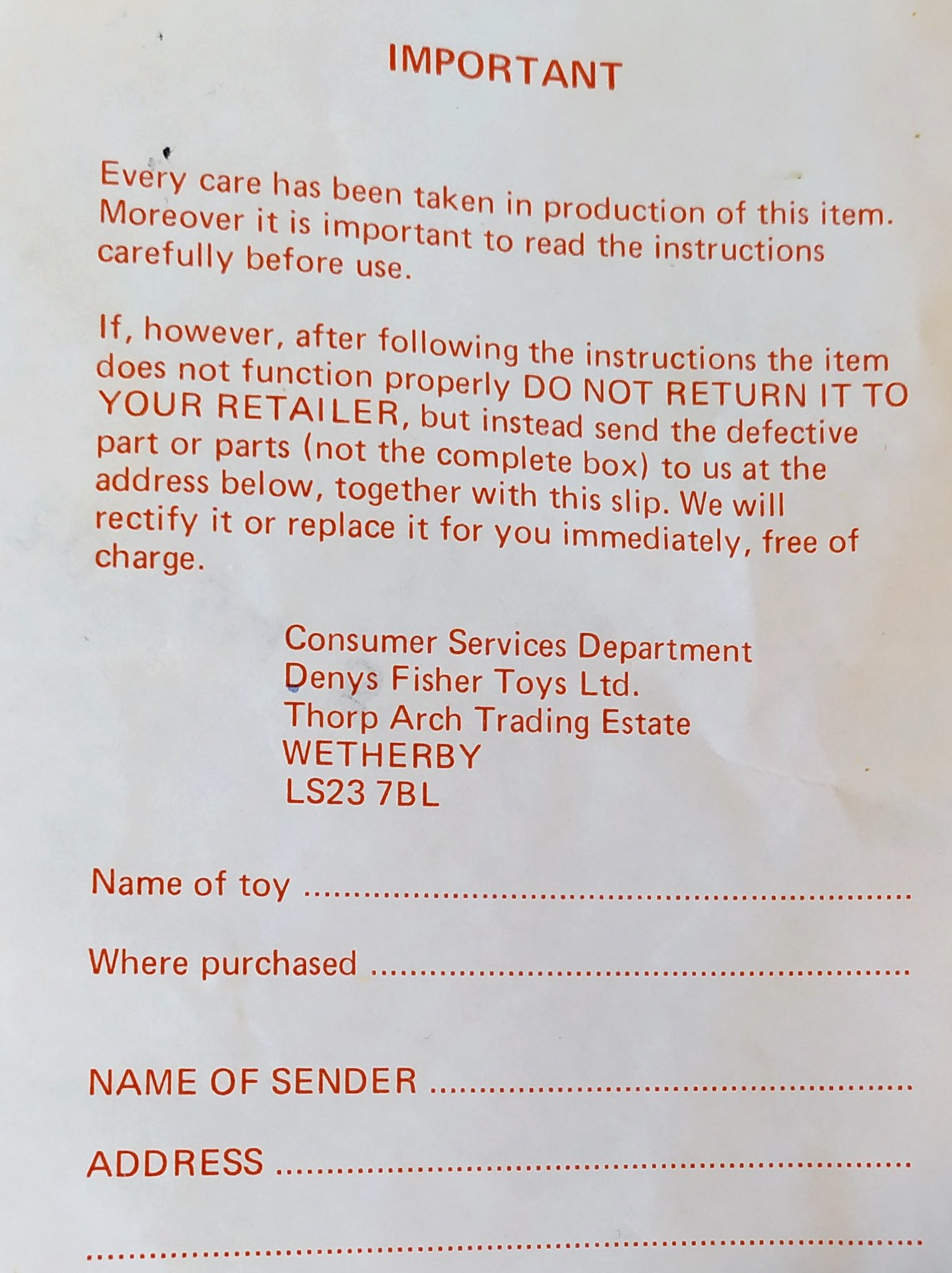
It was Denys Fisher Toys.
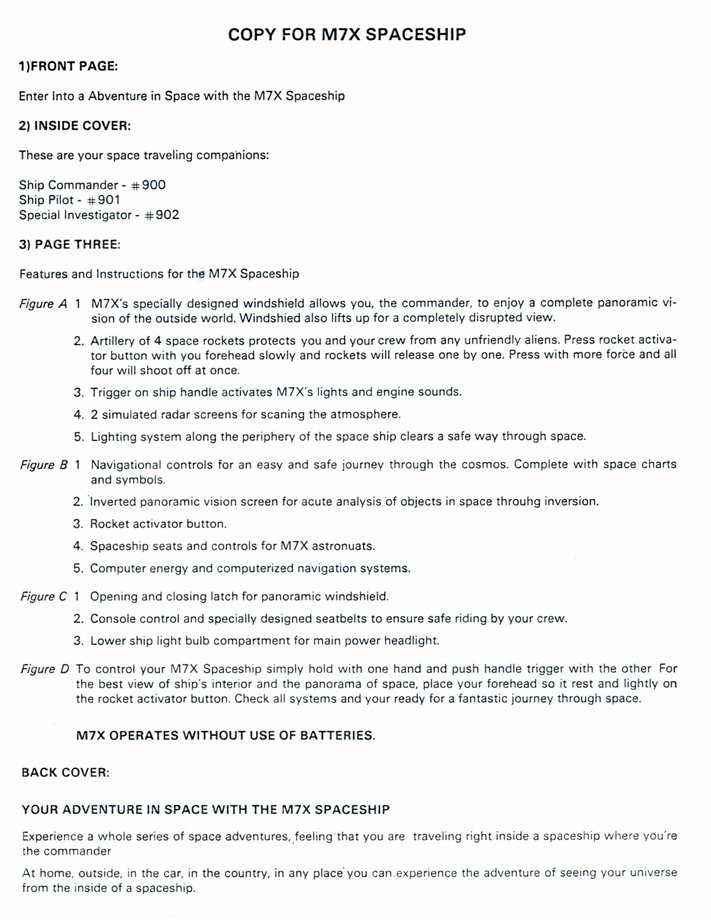
We can also mention here that the M7X spacecraft sold in England during this period included an instruction sheet in English.
Once again, a small document preserved alongside a toy has allowed us to identify a company and link it to the final stage of Madelman's commercial distribution.
The presence of this documentation, together with the testimonies of former employees and the examples that have been located, strengthens the possibility that Denys Fisher Toys was involved in distributing that remaining stock. Even so, further evidence would be needed to establish the precise extent of its involvement and the terms of that arrangement.
This discovery is particularly significant because it allows us to follow Madelman's trail beyond its manufacture in Spain. The figures did not simply disappear when production ended: some continued their journey into other markets, and their boxes and documents still preserve clues about that journey.
A puzzle with pieces still waiting to be discovered
Looking back at these four connections allows us to view the history of Exin and Madelman from a broader perspective.
First came Scalextric, which led us to Lines Bros and Tri-ang. Then the Commercial Register revealed that the relationship between the two companies was also reflected in the corporate structure of Exin Lines Bros itself.
Later, commercial documentation led us to Pedigree Toys, Sindy and the first evidence we have been able to gather about the distribution of Madelman in England. Finally, the recollections of former employees and the documents discovered inside a box have allowed us to explore the possible distribution of the remaining stock through Denys Fisher Toys.
Four connections that, viewed separately, might seem like unrelated episodes, but which together paint a much richer picture: the story of a Spanish toy that became part of an international network of companies, brands, distributors and people.
It has been enormously enjoyable and interesting to bring all this information together over the years. Every document, photograph, figure and conversation has allowed us to move a little further forward, while also reminding us of how much there is still left to discover.
And we would like to finish by returning to Tony and his sister, because their contribution perfectly captures the spirit of this research.
Thanks to a family deciding to preserve toys and papers for decades, we can now learn details that would have been extremely difficult to reconstruct by any other means. What began as part of a father's professional life has ended up helping us better understand the history of toys that meant so much to thousands of people.
To them, to Annie and Maria, to the former Madel and Exin employees who have shared their memories, and to everyone helping us recover this history, we would like to express our most sincere gratitude.
Because researching Madelman's history is not simply about finding rare figures, hard-to-find boxes or old documents. It is also about discovering the human stories behind every object, connecting people who share the same passion and ensuring that a part of our toy-collecting heritage is not lost as time goes by.
Above all, it is about paying a well-deserved tribute to all those people who, in one way or another, made us happy through these toys and who, even today, so many years later, continue to bring us moments of joy and excitement.
If there is one thing we have learned over the years, it is that the history of Madelman always seems to have another surprise in store for those willing to keep searching.
We hope you have found this journey as interesting as we have, and that, just as our research has done for us, it encourages you to look at those little details with fresh eyes, because sometimes they end up revealing great stories.
José Torralba y Jon Diez de Ulzurrun

 ESP